The world’s first VCR retrofit, tested and approved
A two-stroke dual-fuel engine retrofitted with variable compression ratio, measured onboard and approved by amendment.
Read the caseHome / Retrofit and certification
Amendment or new Technical File for retrofit projects, with measurements onboard or at your test bed. From the first talk with class to the approved file.
Plan it from day one
A retrofit is not finished until it is approved. Certification is easy to forget while the engineering and the installation take the attention, and it is expensive to fix at the end.
Bring it in from the first day, and the whole process flows: design choices, installation, tests and documentation fit together, and the vessel can return to service on time.
The same retrofit project, shown two ways.
Retrofit and certification
Six steps from first talk to approved file. We plan, measure and document, and we follow the file until class has signed, so you can focus on the conversion.
We agree scope and requirements with your classification society before anything is planned.
A project description and a test plan with the measurement points, load points and any deviation from the test cycle, agreed through class before the test is scheduled.
We prepare the vessel and the test setup, and calibrate all equipment to NTC 2008.
Together with your engineers, we evaluate which measures suit your engine and operation, measure before and after, and set the engine up for fuel efficiency within the emission limits.
Measured onboard or at your test bed, witnessed by the class surveyor. We calculate the NOx and cycle values.
Witness report, calibration sheets, emission calculations and the amendment or Technical File, fully documented. We follow it until class has signed.
Amendment and Technical File
Every retrofit that changes NOx-relevant components or settings needs an amendment to the Technical File, or a new one. We take it from the first talk with class to the last signature.
When a modified engine is already in an approved Technical File.
When the engine falls outside an existing file, for example a new engine group or a change of Tier.
In both cases we
Project description and test plan agreed with class before the first measurement.
Onboard or at your test bed, by our technicians, calibrated to NTC 2008.
NOx and cycle values, with every calculation documented.
Reports and files ready for the surveyor.
Until the last document is signed.
Retrofit and certification
MEPC.398(83): the route for certifying a modified engine, in force since 1 September 2026.
A substantial modification only holds up if the emissions can be proven. When the measurement and certification scope is brought in from the start, the outcome is known before the vessel returns to service, not discovered at survey. Compliance is built in from day one, with class aligned before the measurement, so the test is done once and the documentation stands up at survey.
MEPC.398(83) amends NTC 2008 with a defined route for an installed engine that has been subject to a substantial modification, or is to be certified to a Tier it did not hold at installation, for example with Tier III SCR. A Tier change means a new Technical File. The limits are unchanged, and the test is performed onboard.
Modifications that can affect NOx, such as LNG dual-fuel or methanol conversion, Tier III SCR, a fixed or variable compression ratio, turbocharger cut-out or part-load tuning, may count as a substantial modification. We assess it with you and class, and plan the test so it is done once.
The route for installed engines that are substantially modified, or certified to a Tier they did not hold at installation.
The procedure applies to the installed engine, so the parent engine is tested where it runs, onboard the ship.
The modified parent engine represents the engine group. The other engines follow as member engines, with a parameter check instead of a full emission measurement.
The 100% load point may be as low as 85% of rated power if the test plan allows it. The test plan is agreed with the Administration before the test, and the nameplate is replaced if power or speed changes.
Retrofit and certification
Do the big work once. The more engines in the engine group, the more you save.
The parent engine, normally the first engine in a series, carries the full job: full documentation, full procedures and the complete test programme. It is done once.
Every other engine in the same engine group follows as a member engine, with a parameter check instead of a full measurement. The more engines in the group, the lower the cost per engine.
Six different engines need six full programmes. Six identical engines can form one engine group, where only the parent engine needs the full programme.
The focus is often on the two-stroke main engine, where the potential looks largest at first sight. Auxiliary engines are often left untouched, because the fuel saving per engine is smaller. But a fleet often has many identical auxiliary engines that can share the same engine group. Certified once on the parent engine, the change is rolled out to every member engine with the parameter check method, and the small saving per engine becomes a large saving across the fleet.
We can go through your fleet for engines in the same engine group. Together we find where a parent engine can serve the most engines, and where the saving is largest.
MEPC.398(83) allows an individual engine or an engine group represented by its parent engine, but not an engine family. We build the parent file, define the parameter check and document how each member relates to the parent.
Retrofit and certification
Measured to NTC 2008 and ISO 8178, onboard or at your test bed.
Every retrofit is proven by measurement. We measure onboard or at your test bed, to NTC 2008 and ISO 8178, with our own technicians and equipment calibrated to NTC 2008, and we document the result the way class and the authorities expect.
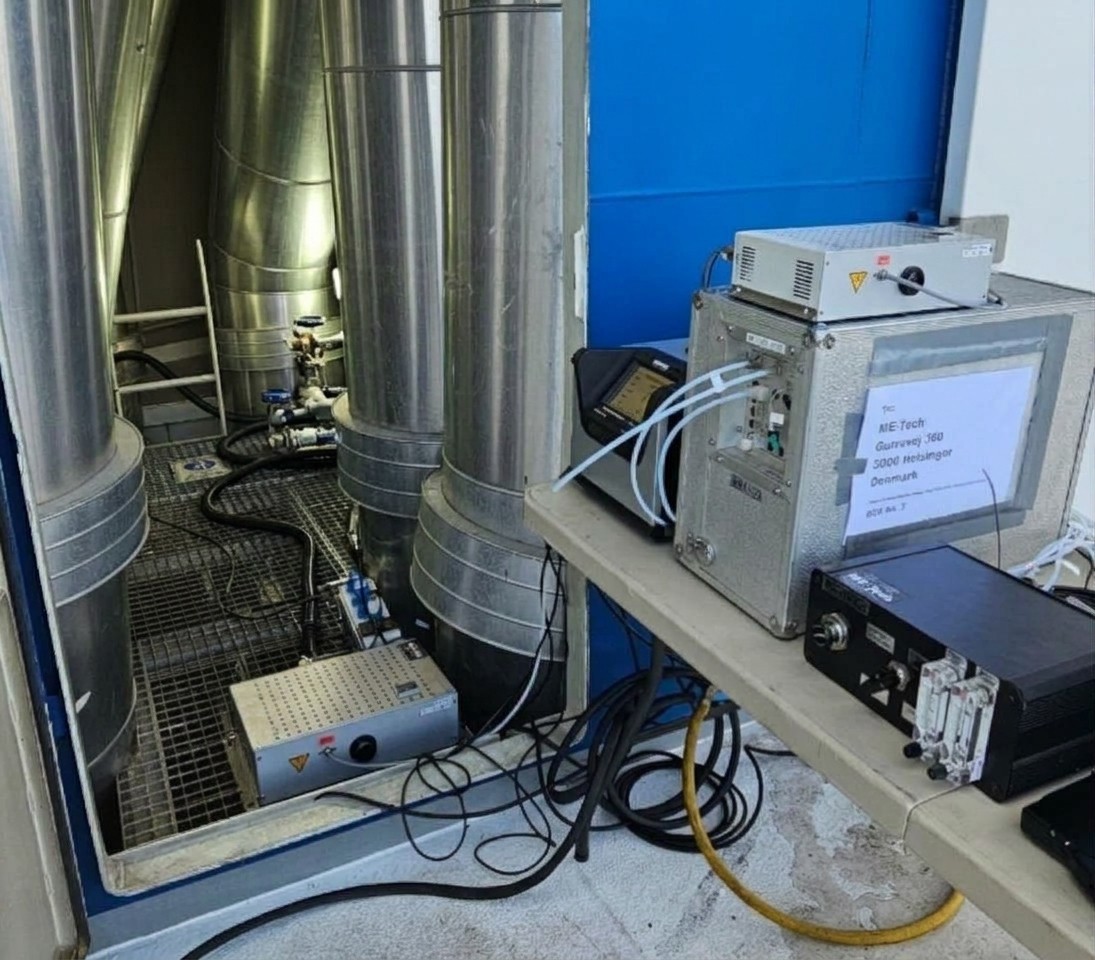 Onboard | Measuring in the funnel
Measured with the analyzers the NOx Technical Code 2008 describes.
Heated FID with a non-methane cutter, and FTIR, following MEPC.414(84).
Particulate matter measured gravimetrically, and smoke as filter smoke number.
The equipment is packed for transport and can be used wherever the engine is.
Retrofit and certification
Qualified technicians for your retrofit, from installation to the approval test.
A retrofit is only finished when it is approved. Our qualified technicians carry out or assist the installation, and stay with the engine through the R&D test until it is ready for certification.
We carry out or assist the installation of your retrofit, working alongside the engine designer, the yard or the crew.
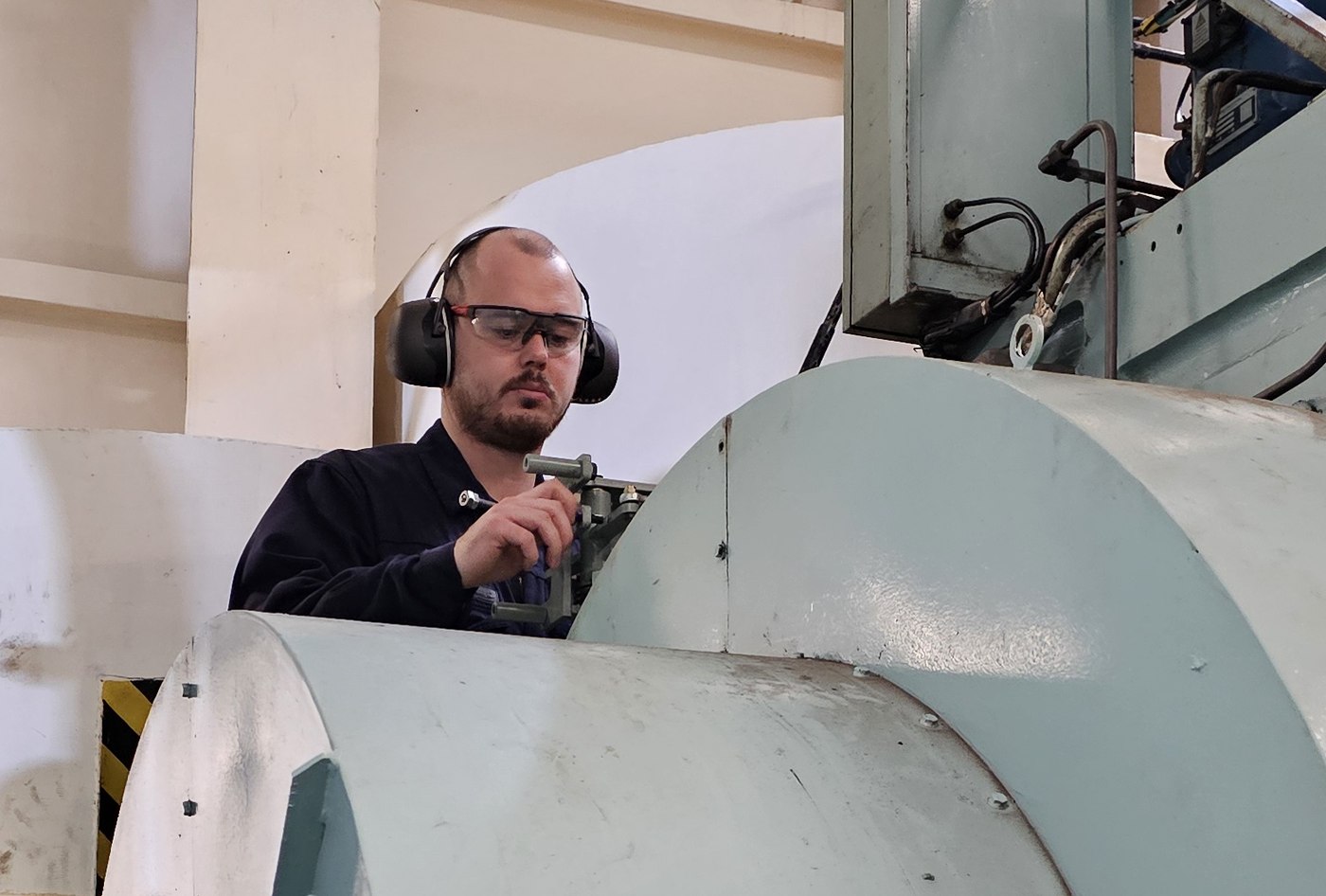 Installation support | Adjusting the engine
During the R&D test we adjust and correct the engine on the spot, based on the measured results, so it is set up right before the final certification test.
One team that installs, measures and adjusts, so the retrofit moves from installation to approval without loose ends.
Retrofit and certification
Typical work, shown without names.
A two-stroke dual-fuel engine retrofitted with variable compression ratio, measured onboard and approved by amendment.
Read the caseTier II and Tier III with SCR in diesel mode, and methanol added in both Tiers.
Read the caseFour-stroke Tier I engines, optimised with new turbocharger matching and timing.
Read the caseTier change from Tier I to Tier III with SCR, certified to Scheme B.
Read the caseTier I auxiliary engines converted to variable injection timing, and certified.
Read the caseTurbocharger cut-out on a two-stroke engine in service, measured onboard and documented for EPA.
Read the caseFour-stroke Tier I engines optimised for part-load fuel consumption.
Read the caseBring certification in from day one. Tell us about the engine and the modification.
