Home / Retrofit and certification / Projects / The world’s first VCR retrofit, tested and approved
The world’s first VCR retrofit, tested and approved
A two-stroke dual-fuel engine retrofitted with variable compression ratio, measured onboard and approved by amendment.
The starting point
The first VCR retrofit in the world. We measured it onboard and documented it for approval.
Variable Compression Ratio (VCR) technology allows the compression ratio of a two-stroke engine to be adjusted to the fuel and the load. It is designed to improve efficiency and reduce fuel consumption. Because the combustion process changes, NOx also changes, so the system must be verified at sea in every operating mode before approval.
For this retrofit, the engine designer supplied the performance measurements, while we carried out the emission measurements onboard. The approval process requires that these measurements follow the NTC 2008 Simplified Measurement Method and comply with emission legislation and class requirements.
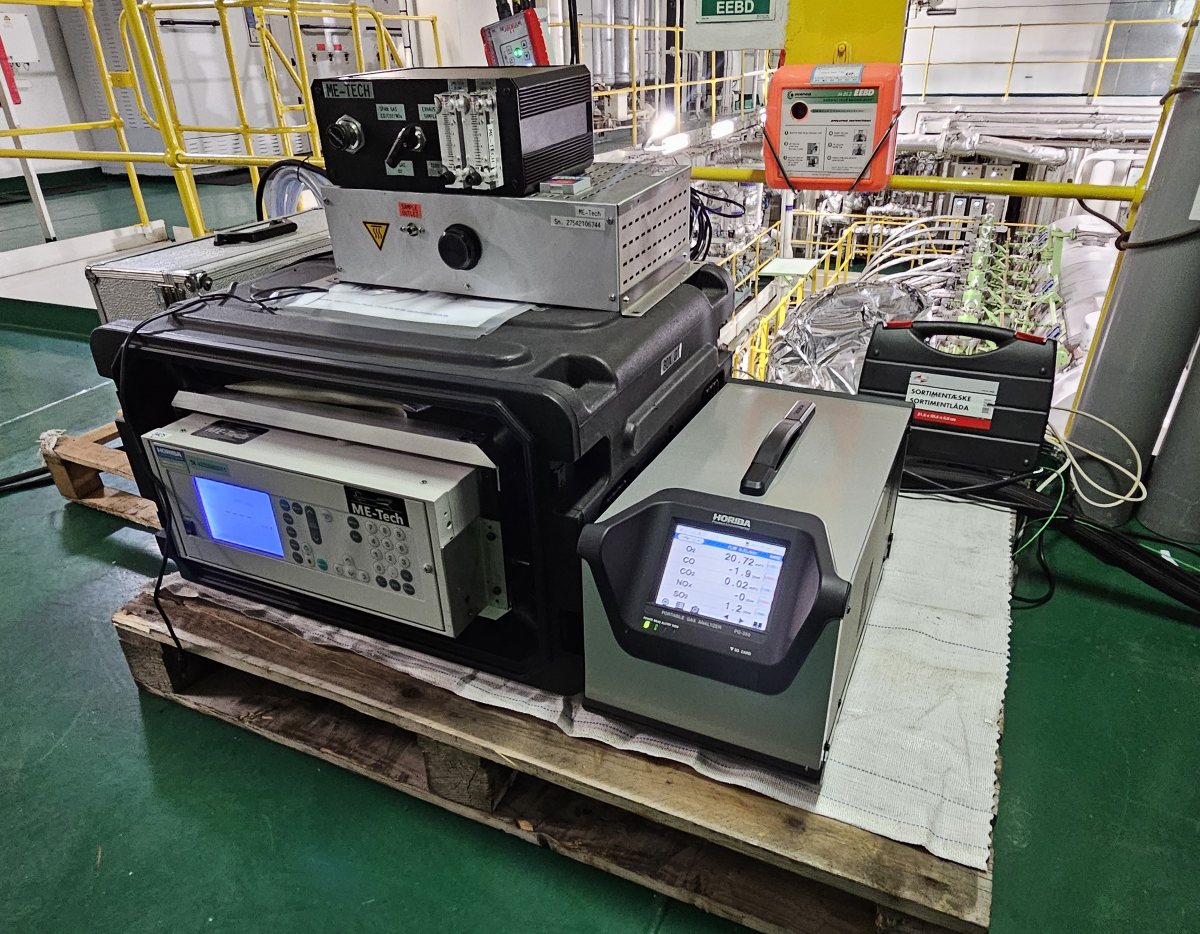
How we did it
- 1Method agreed first
The simplified measurement method of NTC 2008 was agreed with the engine designer and class before the test.
- 2Ship ready
Setup prepared onboard and all emission and ambient equipment calibrated before the test.
- 3Every mode measured
Gas and diesel, with VCR active and in fallback, at 75 and 50 percent load, in one test series.
- 4Witnessed and documented
Witness report and supporting documentation for class, with the fuel sample witnessed.
- 5Amendment approved
The amendment to the Technical File was approved.
We worked closely with the engine designer and class, from the measuring method to the approved amendment. We executed all operating modes in one onboard test series and delivered our part of the documentation, including the measurement data used in the Amendment to the Technical File.
See the engine at work
What the customer got
No surprises at the test
The method was agreed with class before we left the quay, so the data fit the approval process.
All modes in one test series
Gas and diesel, VCR and fallback, measured on the same voyage.
Proof at sea
NOx verified onboard against the values in the original Technical File.
A strong team behind it
The engine designer and ME-Tech worked as one team, with the documentation built for the approval from the start.
Approved. NOx verified at sea, and the way is open for the fuel savings VCR is designed for.
Read the technical details
- Measured to MARPOL Annex VI, Regulation 13, and the NOx Technical Code 2008, with the simplified measurement method
- Performance measurements supplied by the engine designer, emission measurements carried out by ME-Tech
- Agreed the simplified measurement method of NTC 2008 with the engine designer and class before the test
- E2 test cycle of the NOx Technical Code, with the engine coupled to the propeller
- Two distinct VCR modes, gas and diesel, and a fallback mode with VCR inactive, all measured
- Load points at 75 and 50 percent load, in gas and diesel, with VCR and in fallback
- Exhaust gas sampled after the turbocharger, with all emission and ambient equipment calibrated before the test
- Diesel fuel sample taken during the test and witnessed, for analysis by a third-party laboratory
- Witness report and supporting documentation for class
- Documentation for the amendment to the Technical File, including the new NOx-relevant components and software
Shown without names, as agreed with our customers.
Planning a retrofit?
Bring certification in from day one. Tell us about the engine and the modification.
