Home / Calibration
Calibration
Calibration following the methodology in IMO NTC 2008 and ISO standards, onboard or as laboratory calibration.
Calibration
What we offer
Calibration where your instruments are.
Onboard calibration
We calibrate your analyzers and instruments onboard the vessel.
- Analyzers, pressure, temperature and humidity
- Place and date agreed with you
Laboratory calibration
Instruments can also be sent to us for laboratory calibration. You get the same certificate, with the result of every calibration point.
- Laboratory calibration
- Certificate for each instrument
Calibration
Get started
Order a calibration, or download the form and the datasheets.
Calibration
Gas analyzers
NOx, CO, CO2, O2 and THC.
Gas analyzers
We calibrate analyzers for NOx, CO, CO2, O2 and total hydrocarbons (THC). The calibration curve is established with ten points from zero to full scale, where the NTC requires at least six. Each analyzer gets its own certificate.
- NOx, CO, CO2, O2 and THC
- Calibration curve with ten points, in steps of 10 %
- Converter efficiency and interference checks
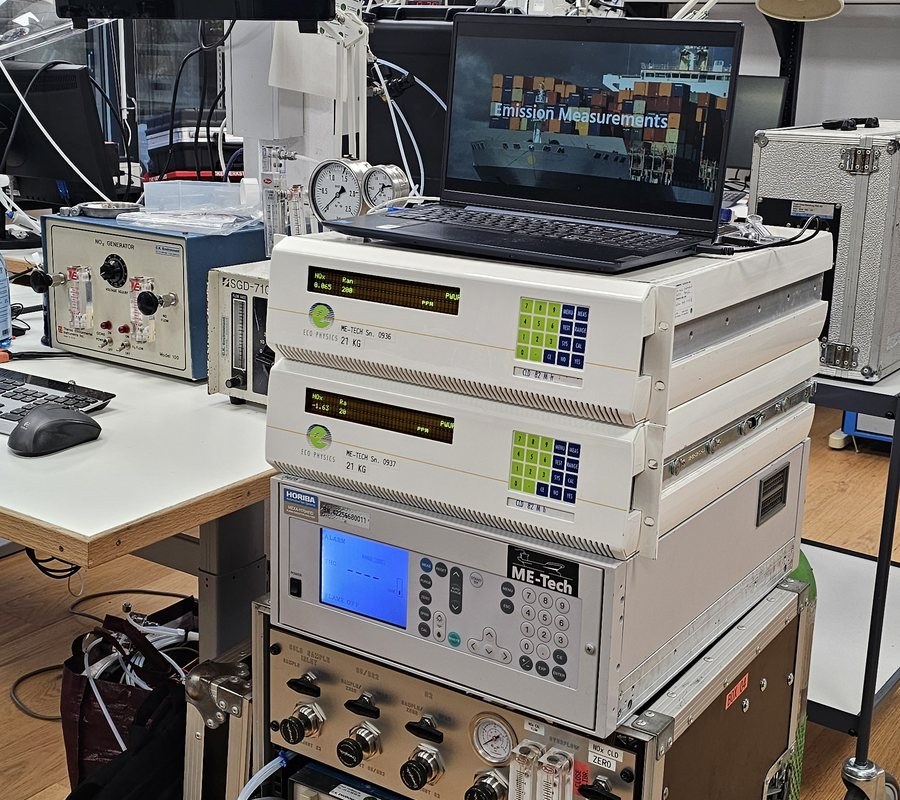 Calibration | Analyzer rack
Calibration onboard
We calibrate the analyzers onboard, with certified calibration gases, so the instruments are checked where they are used.
- Onboard calibration
- Certified calibration gases
- Flame ionization analyzer shown
Calibration
Ambient instruments
Pressure, temperature and humidity of the ambient conditions.
Ambient pressure
We calibrate ambient pressure sensors, which measure the low pressure of the surroundings.
- Ambient pressure sensor
- Low pressure: 0 to 1 bar
Ambient temperature
We calibrate temperature sensors used to measure the ambient temperature, in three points.
- Ambient temperature sensors
- Calibrated in three points
- Certificate for each sensor
Ambient humidity
We calibrate humidity instruments used to measure the ambient humidity, in three points, in a small sealed chamber with salt ampoules.
- Ambient humidity instruments
- Calibrated in three points
- Certificate for each instrument
Reference sensors
Ambient instruments are calibrated against reference sensors that carry an accredited calibration.
- Reference sensors with accredited calibration
- Result of every calibration point
Calibration
Engine performance sensors
The pressure and temperature sensors on the engine.
Engine temperature sensors
We calibrate the temperature sensors used for engine performance measurements, including thermocouples, with a dry-block calibrator against a reference sensor that carries an accredited calibration.
- Thermocouples and temperature sensors
- Up to 600 °C
- Dry-block calibrator
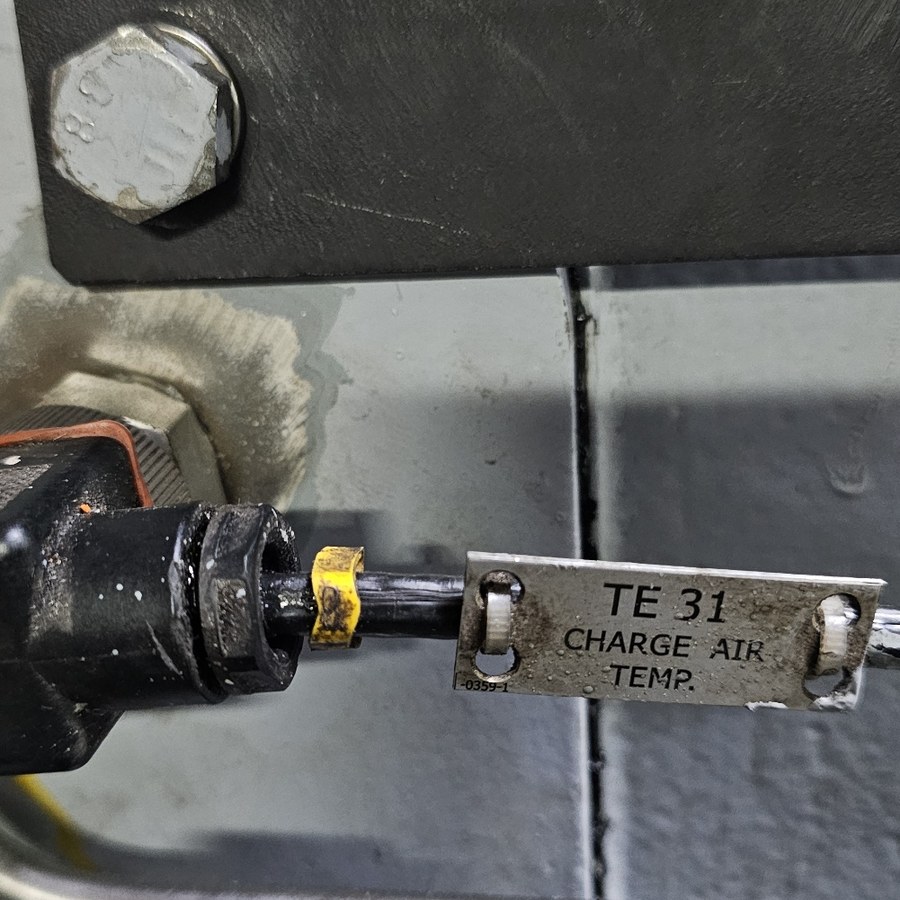 Engine performance sensors | Charge air temperature
Engine pressure sensors
We calibrate the pressure sensors and gauges used for engine performance measurements, against reference equipment that carries an accredited calibration.
- Pressure sensors and gauges
- 0 to 10 bar
 Engine performance sensors | Pressure transmitters
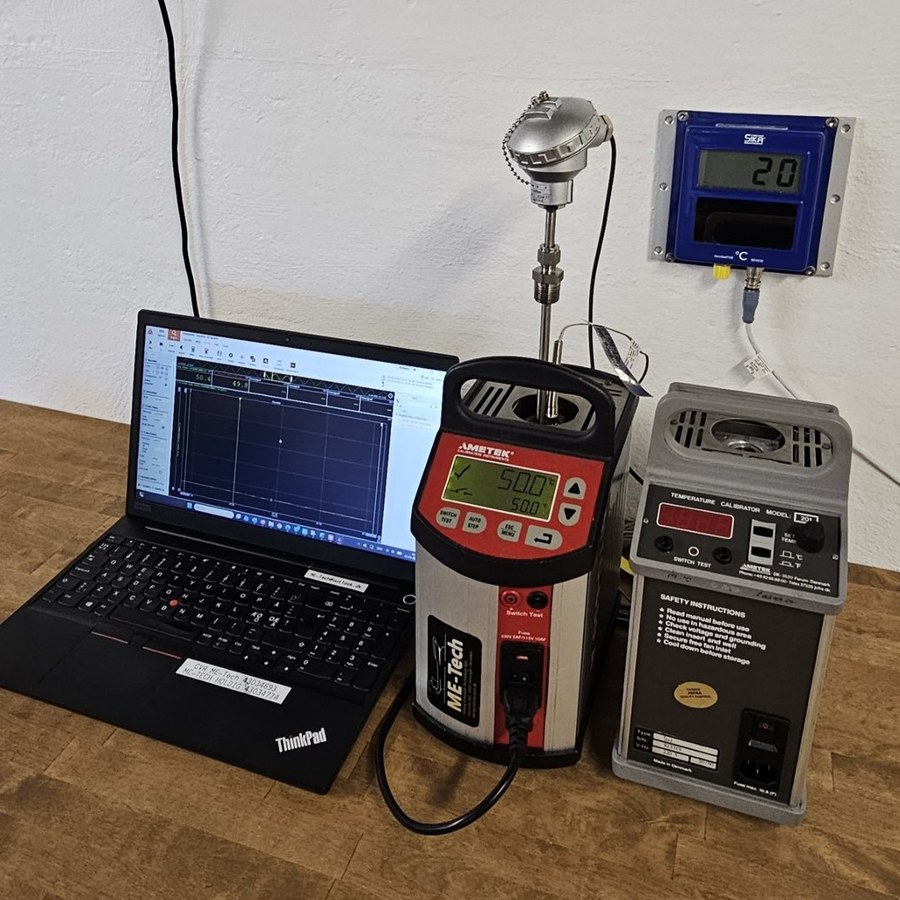 Calibration | Dry-block calibrators
Certificates
Each sensor gets its own certificate, with the result of every calibration point and the date until which it is valid. The calibrated sensors are then used in the performance measurements, which we read together with the emission data.
- Certificate for each sensor
- Result of every calibration point
- Date of calibration and valid-to date
Calibration
How it works
From request to certificate.
Step 1: Request
Fill in the request form, or write to us through the contact page. Tell us which instruments you have, where they are and when you need the work done.
- Instruments, make, model and serial number
- Place and date
Step 2: Plan
We confirm the scope, the place and the date with you before any work starts.
- Scope confirmed
- Place and date agreed
Step 3: Calibrate
The calibration follows IMO NTC 2008. Analyzers are checked with zero and span gases, and temperature instruments with a dry-block calibrator against a reference sensor.
- Analyzers: zero gas and span gas
- Temperature: dry-block calibrator
Step 4: Certificate
Each instrument gets its own certificate, with the result of every calibration point. The certificate states the date of calibration and until when it is valid.
- Certificate for each instrument
- Result of every calibration point
- Date of calibration and valid-to date
Step 5: If a fault is found
If an analyzer is found faulty or does not meet the requirements, we troubleshoot it with specialists and send a separate quote for the repair.
- Troubleshooting with specialists
- Separate quote for the repair
 Calibration | Example certificate
Calibration
Standards and gases
The NOx Technical Code 2008 and certified calibration gases.
NOx Technical Code 2008
Our calibrations follow the NOx Technical Code 2008. Every analyzer and sensor must be calibrated within the deviation limits and the validity period that the code sets for that instrument (Appendix 4, section 1.3 and tables 1 to 4). A calibration establishes the calibration curve. A verification, made before each analysis, checks the instrument with a zero gas and a span gas above 80 % of full scale (section 6). These are the sections we use most.
- Appendix 4, section 5: calibration curve of at least six points
- Appendix 4, section 5.4.1: analyzers calibrated not more than three months before testing
- Appendix 4, section 6: verification with zero and span gas
- Appendix 4, section 1.3 and tables 3 and 4: calibration intervals and permissible deviations, in our PDF
 Calibration | Converter efficiency check
Calibration gases and reference sensors
Zero gas is purified nitrogen. Span gas comes with a certificate from an accredited gas supplier. The gas, concentration, bottle number and expiry date are recorded on the calibration certificate.
- Purified nitrogen as zero gas
- Span gas with a certificate from an accredited supplier
- Certified calibration gases to your specification
- Reference sensors with accredited calibration
- Traceable to reference sensors with accredited calibration
 Calibration | Gas bottle regulator
Calibration
Before you contact us
What helps us give you a clear quote.
Send us the request form, or write to us through the contact page.
Instrument details
Send the make, model, serial number and measuring range, and a previous certificate if you have one. For gas analyzers, tell us which components you measure.
- Make, model and serial number
- Measuring range
- Previous certificate
Working condition
Tell us about faults, alarms or failed checks, and list what belongs with the instrument, such as probes, sampling lines and docking stations.
- Faults, alarms or failed checks
- Probes, sampling lines and accessories
Required result
Tell us whether you need a calibration or a functional check, what the vessel requires and when you need it. Any repair is quoted separately.
- Calibration or functional check
- Vessel requirements and deadline
- Repair quoted separately
Calibration
Our calibration equipment in detail
The equipment we use to calibrate analyzers and sensors.
Analyzer calibration
The equipment we use to calibrate and check the gas analyzers.
- Signal NOxgen III, for converter efficiency
- Horiba SGD-710C gas divider
- Certified calibration gases to your specification
Sensor calibration
The equipment we use to calibrate the pressure, temperature and humidity sensors.
- Pressure calibrator
- Dry-block calibrators for temperature
- Sealed humidity chamber with salt ampoules (HygroPalm)
Calibration due before your next campaign?
Onboard or as laboratory calibration, with as-found and as-left certificates.
